
Tokaj Hungary Travel Guide 2026: Wine, History and What to See
This guide covers visiting Tokaj as a day trip or short stay from Budapest. It does NOT address long-stay accommodation in every surrounding village or border crossing logistics from Slovakia.
What Is Tokaj, Hungary?
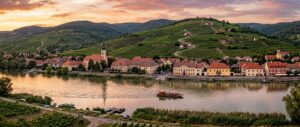
Tokaj is a small town in northeast Hungary that sits at the confluence of the Tisza and Bodrog rivers, at the southern edge of the Zemplén Mountains. It’s the heart of the Tokaj wine region — a stretch of 27 villages spread across volcanic hills that has been producing wine for over a thousand years.
The Tokaj wine region refers to a UNESCO World Heritage Site in northeast Hungary, recognized in 2002 for its unique terroir and historical winemaking traditions. It’s most famous for Tokaji Aszú, a sweet dessert wine made from botrytis-affected grapes, historically called the “Wine of Kings.”
Wine tastings at local estates start from around 3,000 HUF (roughly $8 USD), which makes it genuinely accessible without blowing your travel budget.
That price point surprises a lot of visitors. They assume a UNESCO wine destination means Paris-style bills.
How to Get From Budapest to Tokaj
This is the section most travel guides skip over — or bury at the bottom where it’s useless.
Hungarian Railways (MÁV) operates a direct train from Budapest-Keleti to Tokaj every four hours. Tickets cost $13–15 and the journey takes approximately 2 hours and 43 minutes. Direct IC intercity trains from Keleti depart at 7:25, 9:25, 11:25, 13:25, 15:25, and 17:25, making it easy to plan a same-day return trip.
To get from Budapest to Tokaj by train, follow these steps:
- Head to Budapest-Keleti station (metro line M2, red line)
- Buy your MÁV ticket at the counter or through the MÁV app
- Board the direct IC intercity service — no transfers needed
- Alight at Tokaj station — the town center is a 10-minute walk
Quick note: driving takes about 2 hours 25 minutes via the M3 motorway if you’re renting a car, which makes more sense if you want to visit multiple villages in the wine region like Mád or Erdőbénye in the same trip. The train drops you in the town itself — fine for a day visit focused on Tokaj’s cellar bars and the main square.
Some people argue the day trip format is enough. That’s valid if you’re tight on time. But if you’ve never spent a slow evening in a Hungarian wine cellar while the fog comes in off the Bodrog river — or maybe I should say it this way — if you’ve never done that, staying at least one night changes the experience completely.
The Tokaj Wine Region: What You’re Actually Drinking
Most visitors arrive knowing they want to try Tokaji Aszú. Fewer understand what they’re tasting or why it’s different.
The ancient volcanic soils of Tokaj and the region’s location near the confluence of two rivers create ideal conditions for the development of Botrytis cinerea — a noble rot that is essential to producing the region’s legendary sweet wines. The Tokaj region was declared wine country by royal decree in 1737, making it one of the first formally classified wine appellations in the world — predating even Bordeaux’s classification by over a century.
The primary grape here is Furmint. It’s used both for sweet Aszú wines and increasingly for dry whites that have become seriously sought-after by sommeliers across Europe. Hárslevelű is the other key variety — softer, more floral, and often blended with Furmint.
I’ve seen conflicting data on how many puttonyos levels Tokaji Aszú uses these days — some older sources still cite six levels, while current producers have simplified the classification. My read is that anything labeled Aszú today is at the top of the sweetness spectrum regardless, and you should ask the winery directly what their current style is.
Wine tourism in Tokaj centers on estates rooted in a UNESCO World Heritage wine region of volcanic basalt and clay hills above the Bodrog river, producing Furmint, Hárslevelű, Sárga Muskotály, and Zéta into legendary Aszú and Eszencia sweet wines, as well as dry Furmint styles.
Quick Comparison: Tokaj Wine Styles
Option | Best For | Key Benefit | Limitation Tokaji Aszú | Sweet wine lovers, gifts | Historic prestige, intense complexity | Higher price, very sweet Dry Furmint | Everyday wine drinkers | Crisp, mineral, food-friendly | Less iconic, may surprise expectations Szamorodni | Versatile drinkers | Can be dry or sweet; authentic local style | Less well-known abroad Late Harvest | Mid-range sweet seekers | Approachable sweetness, lower cost than Aszú | Less concentrated
Which Wineries to Visit in Tokaj
Three names consistently stand out for quality, English-speaking staff, and accessible tasting experiences:
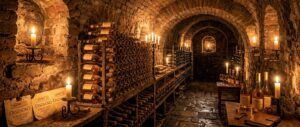
Royal Tokaji is one of the most internationally recognized estates in the region. Founded in 1990 as part of the post-communist revitalization of the wine industry, it’s a good starting point if you want a structured, English-language cellar tour with context.
Disznókő Winery is a larger estate set dramatically on a hillside above the town. The views alone justify a visit. Their dry Furmint is among the most cited in the region, and the tasting room handles visitors well even on weekends.
Oremus Winery, located in nearby Tolcsva, is owned by the Vega Sicilia group from Spain — which might sound like a red flag for authenticity, but the wines are genuinely excellent. Their single-vineyard Mandolás Furmint is a benchmark for the dry style.
Look — if you’re arriving without a reservation on a summer Saturday, you’ll likely find smaller cellars in the town center more accommodating. The bigger estates often require booking ahead, especially for guided tours.
What most guides skip is that Mád, a village about 15 km from Tokaj town, has its own cluster of high-quality producers and far fewer crowds. If you have a car or don’t mind organizing a taxi, it’s worth the detour.
Best Time to Visit Tokaj Hungary
Spring and early autumn are the sweet spots.
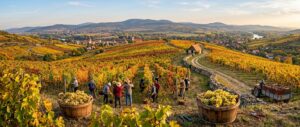
April through June brings mild temperatures, green hills, and fewer tourists. October is harvest season — the most atmospheric time to visit, when grapes are being picked and you can sometimes participate in cellar activities if you’ve arranged it in advance. Autumn also brings cooler temperatures that make long cellar tastings more comfortable.
July and August are busiest, with more visitors and higher accommodation prices. Winter is quiet — some wineries reduce hours or close for private events.
Here’s the thing: the harvest in Tokaj is unusual compared to most wine regions. Because Aszú grapes need to develop noble rot, harvest can stretch from October into November or even December in some years. This unpredictability is part of what makes the wine rare and expensive. Visiting in October means you might catch actual harvest activity rather than a staged demonstration.
Things to Do in Tokaj Beyond Wine
Tokaj isn’t a one-trick destination, though wine is clearly the main event.
The Tokaj Museum (Tokaj Múzeum) sits in a 16th-century Greek merchant’s house and covers the history of the wine trade, Jewish heritage in the region, and local folklore. It’s small but well-curated and gives you context that makes the cellar visits richer. Each town in the Tokaj wine region offers its own unique vibe — from the historic charm of Tokaj to the artistic flair of Szerencs, with castle ruins, river walks, and autumn colors throughout.
The confluence of the Tisza and Bodrog rivers is walkable from the town center. It’s not dramatic in the way that mountain rivers are, but the flat floodplain landscape with vineyards rising behind it is genuinely distinctive — the kind of scenery that doesn’t photograph well but stays with you.
Sárospatak, about 30 km north of Tokaj, has a Renaissance castle that’s one of the finest in Hungary. If you’re staying two nights, it’s an easy half-day excursion.
Day trip vs overnight: if you’re coming from Budapest just for wine tasting, a day trip works. If you want to explore multiple villages, visit the castle, and eat properly, plan for two nights minimum.
Where to Eat in Tokaj
Hungarian food in the region leans toward hearty, meat-forward dishes. Goulash, pörkölt (braised meat stew), and halászlé (fisherman’s soup made from river fish) are the local staples.
Kúria Restaurant is consistently recommended for traditional dishes in a relaxed setting. Reservations are advisable in summer.
For something more casual, the lángos stalls near the main square — fried dough topped with sour cream and cheese — are exactly what they should be. Cheap. Hot. Absorbing all the wine nicely.
Most counter-service spots and smaller restaurants do not have English menus. Pointing and a willingness to try what arrives works fine.
Voice Search Q&A
Q: What’s the best way to get from Budapest to Tokaj?
A: The direct MÁV train from Budapest-Keleti is the easiest option. It takes about 2 hours 43 minutes and tickets cost $13–15. Trains run every four hours throughout the day.
Q: How do I visit Tokaj wineries without a car?
A: Stay in Tokaj town and walk to the cellar bars and smaller estates on foot. For larger wineries like Disznókő or Oremus, book a guided tour with transport or arrange a local taxi — distances are short.
Q: Should I visit Tokaj as a day trip from Budapest?
A: A day trip works for a focused wine tasting and a look at the town. For the full experience — harvest season, multiple villages, the Sárospatak castle — plan at least one or two nights.
Q: Why does Tokaji wine taste so different from other sweet wines?
A: The noble rot fungus (Botrytis cinerea) concentrates sugars and adds complexity to the grapes. Combined with the volcanic soil and cool microclimate, it produces a flavor profile — dried apricot, honey, saffron — that other regions can’t replicate.
Q: When should I book winery tours in Tokaj?
A: Book at least a few days ahead for guided tours at larger estates, especially in summer and during October harvest season. Smaller cellar bars in Tokaj town usually accept walk-ins.
The counter-intuitive reality of Tokaj is this: most people expect a polished wine tourism circuit, the kind you’d find in Tuscany or Burgundy. What you actually get is something older, rougher, and more interesting — a region that was frozen in state during communism, revived in the 1990s by international investment, and is still figuring out its identity between heritage winemaking and modern boutique tourism. That tension is part of what makes it worth visiting in 2026.