
Krka National Park 2026: What Actually Matters
Krka National Park is a 109-square-kilometer river park in Croatia’s Dalmatia region, built around seven travertine waterfalls on the Krka River. It’s Croatia’s third most-visited paid attraction, pulling in roughly 650,000 visitors a year to its falls, behind only Plitvice Lakes and the Dubrovnik city walls.
This guide covers entrances, tickets, swimming rules, and seasonal timing. It does not cover multi-day Dalmatia itineraries or how to combine Krka with Split nightlife — that’s a different trip.
What Krka National Park Actually Is
Krka National Park was proclaimed Croatia’s seventh national park in 1985. It protects the Krka River from just downstream of Knin to Skradin, plus a stretch of the Čikola tributary. The park’s centerpiece is Skradinski Buk, a 400-meter run of 17 cascading waterfalls with a 47.7-meter total drop.
What most guides skip is that Skradinski Buk isn’t the whole park. More than 90% of visitors never go past it, which means Roški Slap, the Burnum Roman military camp, and Visovac Monastery stay quiet even in August.
Quick Comparison
| Entrance | Best For | Key Benefit | Limitation |
|---|---|---|---|
| Lozovac | First-timers, drivers | Large free parking, fast access | Crowded at midday in summer |
| Skradin | Boat-trip lovers | Scenic 20-min river ride included | Paid parking, slower entry |
| Roški Slap / Laškovica | Return visitors, quieter falls | Fewer crowds, real swimming spot | Farther from Split/Zadar |
| Burnum / Puljane | History fans | Roman ruins, amphitheater | Minimal waterfall access |
| Kistanje / Krka Monastery | Off-the-path travelers | Peaceful, monastery visit | Not connected to Skradinski Buk |
Can You Swim at Krka National Park?
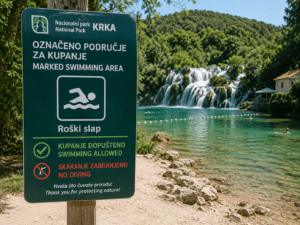
Krka National Park swimming is not allowed at Skradinski Buk or Manojlovac — that ban has been in place since 2021, after thousands of daily swimmers started damaging the tufa formations. The only sanctioned swim zone sits near Roški Slap, plus spots at Stinice and Remetić where the Visovac boats depart.
Here’s the thing: half the blog posts online still show old photos of people swimming under Skradinski Buk. Those photos predate the ban. Don’t plan your trip around them.
Tickets and Daily Visitor Caps
To buy Krka National Park tickets, follow these steps:
- Go to the official npkrka.hr ticketing page
- Pick your entrance and date
- Choose entry time slot for peak season
- Pay online and screenshot your confirmation
- Show it (digital or printed) at the gate
Daily entry is capped — the park limits visitor numbers to protect the ecosystem, and in July and August that cap fills before noon. Buy ahead. Kids under 7 enter free, and student discounts apply with a valid ID from any country.
Best Time to Visit Krka
According to NP Krka’s own visitor data, the park stays open year-round, but the experience shifts hard by season. April through June and September through October give you full waterfall flow with manageable crowds. July and August offer the warmest water and the thickest lines.
Spring vs. autumn: spring brings fuller waterfalls after winter rain, which is better for photography and drama. Autumn brings lower crowds and cooler hiking weather. The key difference is water volume versus foot traffic — pick based on which one bothers you more.
Winter is quiet. Some facilities close, a few trails flood, and daytime highs sit around 7–10°C. If you want the park nearly to yourself, this is when.
Getting There and What to Bring
Krka sits about 15 minutes from Šibenik and roughly an hour from Split or Zadar by car. Public buses stop near both the Lozovac and Skradin entrances, so you don’t need to rent a car just for this trip.
Bring real hiking shoes — the boardwalks get slick near the falls. Sunscreen and a hat matter more than people expect; there’s very little shade around Skradinski Buk in July.
One thing I’d push back on: several sites recommend budgeting a full two days here. For most travelers doing just Skradinski Buk plus a short boat ride, half a day is genuinely enough. Two days makes sense only if you’re adding Roški Slap, Burnum, and Visovac in the same trip.
Wildlife and What Makes the Park Unusual
Krka hosts over 860 plant species and 222 bird species, including golden eagles and peregrine falcons, making it one of the richer biodiversity hotspots on the Adriatic. Some experts frame Krka as primarily a geology destination because of the travertine barriers. That’s fair for the falls themselves, but the birdlife along the river valley is what keeps repeat visitors coming back in shoulder season.
Voice Search Q&A
Q: What’s the best month to visit Krka National Park?
A: May or late September — full waterfalls, warm weather, and noticeably shorter lines than July or August.
Q: How do I book Krka National Park tickets?
A: Buy online at npkrka.hr in advance, especially for June through August visits, since daily caps fill early.
Q: Should I visit Krka or Plitvice first?
A: Visit whichever is closer to your base — Krka suits Split/Trogir travelers, Plitvice suits Zagreb/Zadar travelers.
Q: Why does Krka ban swimming near the main waterfall?
A: Skradinski Buk’s swimming ban started in 2021 to stop erosion from thousands of daily swimmers damaging the tufa.
Q: When should I arrive at Lozovac entrance to avoid lines?
A: Before 9:30 AM in July and August; the daily visitor cap regularly fills by midday.