
Last updated: October 2026
Egg Stain Removal Done Right: Cold Water First, Then Enzymes
Scrape off the solids, rinse from the back in cold water, soak in an enzyme cleaner, then wash cool. That’s the whole method. Skip hot water at every stage.
Removing egg stains means lifting protein residue from fabric before heat locks it in. Egg is mostly protein, so cold water and enzyme cleaners work better than hot water or scrubbing. The aim is to dissolve the stain, not drive it deeper into the fibers.
This guide works best for fresh or dried egg on cotton, polyester, and blends. It won’t help much on stains that already went through a hot dryer, though there’s a rescue plan below. It covers clothes, couches, and carpet. It does NOT cover leather or professional silk restoration.
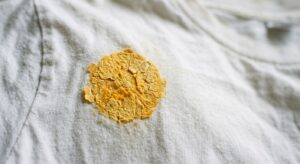
Why Heat and Scrubbing Make Egg Stains Worse
Why egg stains turn stiff and crusty after a warm wash comes down to protein chemistry. According to the American Egg Board, egg whites begin to set at roughly 144–149°F, and yolks at 149–158°F. Hot tap water and warm wash cycles can sit right in that range, which bonds the protein to the fabric.
Most people assume a hot soak loosens food stains. For egg, the opposite is true.
Rubbing a wet egg stain makes it worse because friction pushes liquid protein deeper into the weave. Dabbing with a paper towel does the same thing on a smaller scale. Users who’ve tried scrubbing often report a wider, yellower patch than the one they started with. Lift from the surface instead.
I’ve seen conflicting advice on yolk: some sources say pre-treat with dish soap first, others say go straight to enzymes. My read is that a single drop of dish soap helps with the greasy yolk, but only after the cold rinse.
How to Remove Egg Stains From Clothes
To remove an egg stain from clothes, follow these steps:
- Scrape off excess egg with a dull knife.
- Rinse the back of the stain under cold water.
- Work enzyme detergent into the stain.
- Soak in cold water for 30 minutes.
- Wash on cool, then air-dry.
According to detergent makers such as Ariel and Persil, protease enzymes are designed to break down protein stains like egg and milk. That’s why an enzyme product beats plain soap here. Check the label for the word “enzyme” or “bio” before you buy.
Fresh Stains
Speed matters. Scrape first, and don’t wipe. Hold the fabric stain-side down under a cold tap so the water pushes the egg out the way it came in. Then rub enzyme detergent in gently with your fingertip and let it sit for ten minutes before soaking.
Dried or Old Stains
Dried egg needs patience. Flake off what you can, then soak the item in cold water mixed with enzyme detergent for one hour, or overnight if the patch is thick. Use a soft brush in short strokes.
Look — if the stain has already been through the dryer, here’s what actually works: repeat the cold soak twice, then try an oxygen bleach on whites or colorfast fabrics.
Don’t worry if it isn’t gone yet; you’ve done the hard part, and it’ll likely lift on round two. Check the stain before any heat touches the garment again.
Egg Stains on Couches, Carpets, and Delicates
Here’s the thing: you can’t toss a sofa into the washing machine.
Upholstery and Carpet
Scrape the egg off with a spoon and blot with a cold, damp cloth. Mix a cup of cold water with a few drops of dish soap, blot the stain, then blot with plain cold water to remove soap. Finish by pressing a dry towel on top. Check the care tag first: “W” means water-based cleaners are safe, while “S” means solvent only.

Silk, Wool, and Delicates
What most guides skip is this: silk and wool are protein fibers themselves, so strong protease enzymes can damage them. Use cold water and a mild, enzyme-free detergent, and keep soaks short. If the label says dry-clean only, take it to a cleaner and point out the stain.
One opinion some readers will push back on: skip baking soda pastes for egg. They’re gritty and don’t dissolve protein, so they mostly add a step without adding results. Enzymes do the real work.
Which Stain Remover Should You Use?
Quick Comparison
| Option | Best For | Key Benefit | Limitation |
|---|---|---|---|
| Enzyme detergent (Ariel, Persil) | Cotton, polyester, blends | Digests egg protein | Can harm wool and silk |
| Oxygen bleach (OxiClean, Vanish) | White or colorfast fabrics | Lifts leftover yellow shadow | Patch-test colors first |
| Dish soap | Greasy yolk, upholstery | Gentle, cuts fat | Weak alone on protein |
| Cold water only | Fresh spills | Costs nothing, never sets stains | Won’t clear dried egg |
Enzyme detergent vs oxygen bleach: enzyme detergent is better suited for fresh egg on everyday fabrics because it digests protein. Oxygen bleach works better on old yellow shadows on whites. The key difference is that enzymes break down the stain, while oxygen bleach lightens what remains.
Some experts argue dish soap alone is enough for egg. That’s valid for a small, fresh drip on cotton. But if you’re dealing with dried yolk or a stain that’s been sitting overnight, an enzyme product does the heavy lifting.
Mistakes That Lock the Stain In
Most failed attempts trace back to the same few errors:
- Using hot or warm water at any stage
- Rubbing or scrubbing before scraping off the solids
- Putting the item in a hot dryer before checking the stain
- Mixing chlorine bleach with vinegar or ammonia, which releases toxic fumes
Quick Answers
Q: How do I get dried egg out of clothes?
A: Scrape off flakes, then soak in cold water with enzyme detergent for one to eight hours. Wash on cool. Repeat the soak if a shadow remains before drying.
Q: What’s the best thing to remove egg stains?
A: An enzyme detergent like Ariel or Persil works best on cotton and polyester because it breaks down protein. Oxygen bleach helps on whites.
Q: Should I use hot water on egg stains?
A: No. Heat sets egg protein into the fabric. Use cold water for rinsing, soaking, and the first wash.
Q: Why does egg leave a yellow stain?
A: Yolk contains pigments and fat that cling to fibers. Yellow left after washing usually means fat residue, so treat it with dish soap and rewash.
Q: When should I call a dry cleaner?
A: When the item is silk, wool, or labeled dry-clean only, or when the stain survives two rounds of treatment. Don’t tumble-dry it first.
Final Word
Egg stains are stubborn only when heat gets involved. Cold water, an enzyme cleaner, and a little patience will clear most of them, fresh or dried. Check the stain before the dryer, every single time.