
How to Address an Envelope and Package Correctly (Complete Guide for the USA)
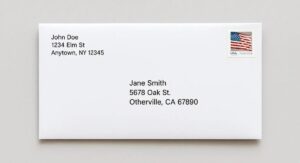
Addressing mail looks simple, yet small mistakes can delay delivery. This complete guide explains How to Address an Envelope and Package Correctly using clear steps that match USPS expectations. You’ll learn how to send mail in the USA with confidence, whether you’re mailing letters, postcards, or parcels.
Why Proper Addressing Matters
A correctly written address keeps mail moving through the mail delivery process without friction. USPS relies on automated sorting machines and USPS high-speed sorting systems that scan addresses fast. When details are missing, mail can stall or return.
Proper formatting also protects your time and money. Accurate addresses reduce resends, improve trust, and ensure mailing letters domestically arrives on schedule. In short, precision equals speed.
Basic Parts of an Address You Must Know
Every U.S. address follows a predictable order. The recipient address format includes the full name, street details, city, state, and ZIP Code. Each line guides machines and humans alike.
The sender address matters too. Clear return address placement helps USPS route undeliverable items back safely. When you address envelope correctly, both sides of the journey stay covered.
How to Address a Domestic Envelope (Step-by-Step)
Domestic mail follows USPS rules designed for speed. When you send mail step by step, alignment and spacing matter as much as spelling. Envelopes carry flat and flexible items like letters and cards.
Use a clean layout on a rectangular envelope with legible text. Keep content light enough to meet the letter weight limit for standard rates and smooth processing.
Correct Format for Domestic Addresses
Write the recipient’s name first, then the street line, followed by city, state, and ZIP Code. This order matches USPS scanners and supports how to send a letter without delays.
Where to Write the Recipient Address (“To” Section)
Place the delivery address in the bottom center recipient address area. This location improves visibility for scanners and clerks handling envelope and postcard mailing.
Return Address Placement (“From” Section)
Write the top left corner return address clearly. Proper return address placement ensures recovery if delivery fails and supports USPS mail services standards.
How to Address an International (Overseas) Envelope
International mail adds one crucial line. The country name must appear last and in English. This simple rule keeps overseas items moving.
Formatting also matters for customs and foreign postal systems. Clear spacing reduces errors during cross-border handling and sorting.
International Address Format Explained
Follow local formatting for the destination, then add the country on the final line. Keep text simple to avoid confusion during transfer.
Country Name Placement Rules
Always write the country name alone on the last line. Capital letters help foreign systems read it quickly.
Tips to Avoid International Delivery Issues
Use verified addresses, avoid abbreviations, and consider certified mail service or registered mail service for important documents.
How to Address Packages and Parcels Properly
Packages need stronger labels than letters. Boxes travel farther and face more handling during the mail delivery process.
A sturdy label prevents smears and tears. Choose materials that protect ink and paper throughout transit.
Package Address Label Format
Center the label on the largest surface. Use large fonts and include both addresses to support postage calculation and scanning.
Packaging and Labeling Best Practices
Avoid loose labels. For rigid or lumpy items, use a padded envelope or box to prevent damage and delays.
How to Write Addresses for Special Situations
Some mail needs extra clarity. Businesses, apartments, and military mail follow specific rules that USPS recognizes instantly.
Correct formatting here avoids rerouting and saves days in transit.
Business and Company Addresses
Include department names when needed. This helps internal mailrooms deliver faster.
Apartment, Suite, and PO Box Addresses
Always include unit numbers on the address line. PO Boxes replace street addresses entirely.
Military (APO, FPO, DPO) Address Format
Use APO, FPO, or DPO with state codes and ZIPs. Never add country names to military mail.
Stamp and Postage Placement Rules
Postage placement affects acceptance. Put the upper right corner stamp exactly where USPS expects it. Many ask where to put stamp on envelope, and the answer never changes.
A first class mail stamp covers standard letters. The forever stamp cost adjusts over time, while postcard stamp price is lower for standard cards.
| Mail Type | Typical Rate |
|---|---|
| Letter (1 oz) | Forever stamp |
| Postcard | Postcard rate |
| Package | Based on weight and size |
Common Addressing Mistakes to Avoid
Missing ZIP Codes and unclear handwriting cause returns. Commas and symbols can confuse scanners during USPS high-speed sorting.
Avoid decorations that create nonmachinable mail. For embellished invitations like wedding invitation mailing, covers protect wax seals and ribbons and preserve appearance.
Address Formatting Examples (Visual Guide)
A standard envelope shows the top left corner return address, the bottom center recipient address, and postage on the top right. Packages show centered labels with barcodes.
These layouts align with USPS equipment and speed up delivery.
Final Tips for Faster and Error-Free Mail Delivery
Choose the right service for the job. Priority Mail, priority mail express, and extra mailing services offer speed and security. Add insurance for mail or tracking options when value matters.
Decide between mailbox vs post office drop-off. A blue collection box works for letters, while counters help with packages and hand-canceled mail. Delivery confirmation adds peace of mind.