
Iran’s Conflict With Israel and the United States: A Deep, Clear Guide for American Readers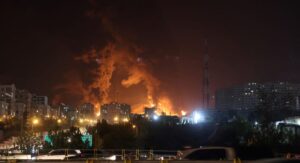
Iran’s Conflict With Israel and the United States is one of the most volatile clashes defining current Middle East tensions, touching global security and energy markets. This long‑running Iran Israel conflict stems from deep distrust, competing regional ambitions, and differing visions for power. In recent years, what began as covert proxy battles grew into serious military exchanges, including drone strikes and ballistic missile attacks between Tehran and Jerusalem, raising fears of broader regional instability and geopolitical tensions that could draw in Washington.
For the United States, involvement reflects not only support for allies but also concern over nuclear escalation, terrorism, and the fragile balance of peace in a rapidly changing region.
Conflict Between Israel and Iran
The relationship between Iran and Israel shifted dramatically after Iran’s 1979 revolution. Since then, mistrust evolved into open hostility. Instead of traditional battles, both sides leaned into proxy warfare. Iran cultivated an axis of resistance that extended across Lebanon, Gaza, Syria, and Yemen. These networks allowed Tehran to strike indirectly through Iran-backed militias, keeping pressure on Israel while avoiding open war. Over time, however, covert moves grew bolder. Drone strikes, cyber operations, and covert sabotage blurred the line between secrecy and spectacle.
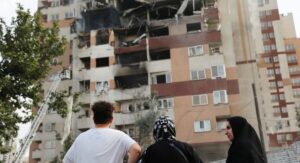
Recent years shattered that line. Israeli operations targeting Iranian positions in Damascus, Syria triggered Iranian retaliation involving ballistic missile attacks and mass drone launches. For the first time, the two states edged toward direct confrontation. Each exchange heightened regional instability and amplified fears of regional war spillover. As rockets crossed borders and alarms echoed across cities, the conflict stepped into a new phase defined by speed, visibility, and mounting risk.
History of Iran’s Nuclear Program
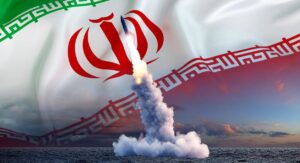
At the core of Iran’s Conflict With Israel and the United States lies the Iran nuclear program. It began decades ago with international support, then transformed after war and revolution. By the early 2000s, secret facilities and enrichment activities sparked global alarm. Inspectors from the International Atomic Energy Agency (IAEA) sought clarity. Iran insisted its efforts focused on civilian power. Western governments worried about weapons-grade uranium and covert nuclear activities.
The turning point came in 2015 with the Joint Comprehensive Plan of Action (JCPOA). Negotiated with world powers and endorsed by the United Nations Security Council (UNSC), the agreement limited centrifuges, reduced stockpiles, and expanded nuclear inspections. Iran received sanctions relief. Supporters called it a firewall against proliferation. Critics saw loopholes. When the United States withdrew and enforced sanctions reinstatement, Iran resumed higher levels of uranium enrichment. Attention again centered on nuclear facilities (Natanz, Fordow, Isfahan), the safety of nuclear scientists, and the size of Iran’s growing uranium stockpiles.
Key Nuclear Sites at the Center of Global Concern
| Site | Location | Why It Matters |
|---|---|---|
| Natanz nuclear facility | Central Iran | Main uranium enrichment complex |
| Fordow nuclear site | Near Qom | Underground plant protected from attack |
| Isfahan nuclear center | Central Iran | Conversion and research operations |
These locations symbolize why diplomacy remains fragile. Every inspection dispute or enrichment milestone reshapes the strategic conversation.
Iran’s Regional Proxies
Iran rarely confronts its rivals head-on. Through the Islamic Revolutionary Guard Corps (IRGC) and its external branch, the Quds Force, Tehran built a web of partners stretching across the Middle East. These groups form the operational backbone of Iran’s influence. They allow Tehran to challenge adversaries, threaten shipping lanes, and pressure borders without conventional war.
In Lebanon, Hezbollah Lebanon wields enormous military capacity. In Gaza, Hamas Iran support deepens Israel’s southern threat. In Yemen, Houthis Yemen pressure maritime routes. Across Iraq and Syria, armed factions test U.S. patrols and allies. Washington accuses Tehran of large-scale terrorist financing and directing proxy forces in Syria and Iraq. This network fuels cross-border attacks, sustains chronic instability, and ensures that any clash with Israel carries regional consequences.
Trump’s First-Term Clash With Iran
The presidency of Donald Trump marked a decisive shift. His administration exited the JCPOA and launched a sweeping maximum pressure campaign. Expanded sanctions on Iran cut oil exports and restricted financial flows. The stated aim focused on forcing a broader agreement that addressed missiles, militias, and regional behavior. Instead, tensions escalated. Tankers burned. Drones fell. U.S. warships moved closer.
The crisis peaked after the killing of Qasem Soleimani, leader of the Quds Force. Iran responded with missile strikes on bases hosting American troops. Though casualties were limited, the exchange revealed how rapidly Iran’s Conflict With Israel and the United States could spiral. Even as later efforts under discussions involving Biden and Iran explored renewed talks, the shadow of that confrontation continues to influence strategic decisions.
The Role of the United States in Iran’s Conflict With Israel
The United States occupies a pivotal position. As Israel’s closest ally, Washington provides intelligence, missile defense support, and diplomatic backing. American naval forces patrol the Gulf. Thousands of personnel operate from regional bases. These commitments seek to deter aggression and reassure partners. They also bind the U.S. directly to regional outcomes.
Every crisis forces difficult choices. How far should deterrence go? When does protection become participation? As U.S.-Iran relations oscillate between cautious engagement and stern warning, policymakers weigh military readiness against diplomatic opportunity. The presence of U.S. forces in the Middle East ensures that escalation anywhere could involve American lives.
Economic Warfare, Sanctions, and Energy Security
Economic pressure forms a second battlefield. International sanctions, including measures enforced through the UNSC, struck Iran’s economy with historic force. Oil export restrictions slashed revenues. Inflation surged. Unemployment rose. Supporters argue these tools curb dangerous behavior. Critics counter that prolonged economic pressure on Iran entrenches hardliners and deepens humanitarian strain.
Global markets feel the tremors. Incidents in the Strait of Hormuz disrupt shipping insurance and fuel costs. American consumers eventually notice. These economic linkages reveal how Iran’s Conflict With Israel and the United States extends far beyond missiles. It shapes everyday realities, from supply chains to energy bills.
Risks of a Wider War and What Comes Next
The greatest threat now lies in miscalculation. As Israel targets missile production facilities and Iran upgrades air defense systems, each side prepares for escalation. Military escalation no longer seems theoretical. Analysts warn that sustained exchanges could overwhelm defenses, drawing multiple states into open conflict.
Diplomacy remains possible, though strained. Talks over nuclear non-proliferation continue through intermediaries. Confidence-building measures rise and fall. Whether these channels can outpace suspicion remains uncertain. The choices made today will determine whether the region steps back from the edge or inches closer.
Conclusion: Why This Conflict Matters to America’s Future
Iran’s Conflict With Israel and the United States shapes the architecture of modern security. It influences how the U.S. deploys power, manages alliances, and confronts nuclear risk. The struggle ties together nuclear ambition, proxy networks, and unresolved rivalries. Each strand reinforces the others.
For Americans, the lesson is clear. This conflict doesn’t stay overseas. It touches energy markets, defense budgets, and diplomatic credibility. Understanding its roots and trajectories equips citizens to better grasp the stakes behind each headline. The future of Middle Eastern stability, and America’s role within it, depends on how this enduring confrontation evolves.