
Is Slovenia Worth Visiting in 2026: The Honest Traveler’s Verdict
This guide covers first-time visits to Slovenia for independent travelers, including non-EU nationals. It does not address multi-week hiking expeditions or organized group tours in detail.
Slovenia is worth visiting. That’s the short answer.
It’s a small country — roughly the size of New Jersey — that quietly packs in Alpine lakes, Adriatic coastline, underground caves, and a walkable capital city, all within a few hours of each other. According to the Slovenian Tourist Board, the country recorded over 6.8 million tourist arrivals in 2023, a record high. And yet, most of those visitors only saw Lake Bled. The rest of the country remained almost untouched.
That’s exactly why it still makes sense to go in 2026.
What Slovenia Actually Is (And Why Most Travelers Get It Wrong)
Slovenia is a Central European country — a full European Union member, Schengen zone country, and eurozone economy — that borders Italy, Austria, Croatia, and Hungary. It’s not a Balkan beach destination. It’s not an Austrian ski resort. It sits somewhere genuinely in between, and that in-between quality is the whole point.
Most people searching this question are doing it because Slovenia keeps appearing in their Instagram feed or travel forums, but they can’t quite place it geographically or emotionally. The confusion is understandable. Slovenia doesn’t have one iconic draw the way Paris has the Eiffel Tower or Santorini has those white domes. What it has instead is density — a surprising amount of very different landscapes and experiences in a very small area.
Or maybe I should say it this way: Slovenia is the country you visit when you’re tired of queuing for the same photos everyone else already has.
Quick note: it’s not Slovakia. They’re two entirely separate countries, and mixing them up is one of the most common mistakes travelers make when researching Eastern Europe.
Is Slovenia Expensive? Real Costs for 2026
Slovenia is mid-range by European standards. It’s noticeably cheaper than Austria or Switzerland, slightly more expensive than Croatia, and considerably more affordable than Paris or Amsterdam.
Here’s a realistic daily budget breakdown:
Quick Comparison: Slovenia Daily Budget Tiers
| Budget Tier | Who It’s For | Daily Spend (EUR) | Daily Spend (USD approx.) |
|---|---|---|---|
| Budget | Hostels, self-catering, buses | €45–65 | $48–70 |
| Mid-range | 3-star hotels, sit-down meals | €90–130 | $97–140 |
| Comfort | Boutique stays, hire car, wine | €160–220 | $172–238 |
A sit-down lunch in Ljubljana runs €10–14. A local beer costs €2.50–3.50. A return cable car to Bled Castle is around €16. Transport between major towns via FlixBus or the national bus network typically costs €5–12 per leg.
Accommodation in Ljubljana’s old town runs €25–40 per night in a hostel and €70–110 in a mid-range hotel. In the Soča Valley or Karst region, guesthouse rates are often lower, and the quality-to-price ratio is higher than almost anywhere else in Western or Central Europe.
The honest caveat: Lake Bled itself has become noticeably more expensive over the past two years. Expect to pay tourist-area prices there. The rest of the country hasn’t caught up yet.
What most guides skip is the cost of doing Slovenia wrong — flying into Ljubljana, rushing to Bled, posting the photo, and leaving. That itinerary is expensive relative to what you actually experience. Spreading two or three nights across different regions brings the per-experience cost down sharply.
Schengen Visa Requirements for Non-EU Travelers
This is the section almost every competitor article ignores. Let’s fix that.
Slovenia is a full Schengen member. If you hold a passport from Pakistan, India, Bangladesh, or most countries outside the EU and a handful of bilateral-agreement nations, you will need a Schengen visa to enter.
To enter Slovenia as a non-EU national, follow these steps:
- Determine your visa requirement via the official EU visa checker at ec.europa.eu/home-affairs
- Apply for a Schengen Type C short-stay visa at the Slovenian embassy or consulate in your country
- Submit proof of accommodation, return travel, travel insurance (minimum €30,000 coverage), and sufficient funds
- Allow 15–45 days for processing — peak season (May–August) tends to run slower
- Confirm your 90-day/180-day Schengen allowance if you plan to visit other member states on the same trip
Citizens of the United States, United Kingdom, Canada, Australia, and several Gulf states currently enter visa-free for short stays, though rules do change — always verify at the official Slovenian Ministry of Foreign Affairs website before booking.
Look — if you’re a Pakistani or South Asian traveler and you’ve been avoiding Slovenia because the visa process felt unclear, here’s what actually matters: the Schengen application is the same process you’d use for France, Germany, or Italy. Slovenia is simply one of the least-crowded options to use that visa, which makes it arguably the best value Schengen destination for a first-time visitor.
Best Places to Visit in Slovenia Beyond Lake Bled
Lake Bled is beautiful. It’s also genuinely worth seeing. But it’s now so visited that on a summer weekend, the viewpoints are shoulder-to-shoulder, the rowing boats are booked weeks ahead, and the famous cream cake at the lakeside café costs more than it used to.
Here’s the thing: the places just outside the Bled tourist circuit are often dramatically better.
Soča Valley
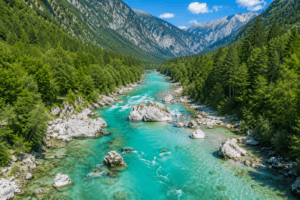
The Soča River runs an impossible shade of turquoise-green through a steep Alpine valley in northwestern Slovenia. The valley sits within the Triglav National Park boundary and offers kayaking, hiking, and some of the most striking river scenery in all of Europe. Bovec is the activity hub; Kobarid has a thoughtful World War I museum that provides genuine historical context for the region. Crowds here are a fraction of what Bled sees.
Karst Region and Postojna Cave
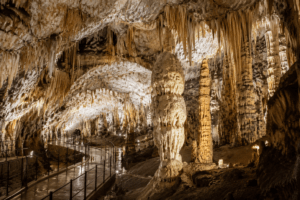
The Karst plateau in southwestern Slovenia — which literally gave the world the geological term “karst” — contains Postojna Cave, one of the largest cave systems in Europe. The cave tour runs on a narrow-gauge train through 5km of illuminated stalactite chambers. Adjacent Predjama Castle, built into the mouth of a cliff cave, is equally worth the visit and genuinely unlike anything else you’ll see on a European trip.
Piran
Piran is a small medieval Venetian town on Slovenia’s 47km Adriatic coastline. It doesn’t feel like Central Europe at all — the architecture, the sea air, the narrow lanes, all of it reads as Italian. It’s quieter than Croatia’s Dalmatian coast, dramatically less expensive than Italy, and reachable from Ljubljana in under two hours. Sunset from Tartini Square is one of those travel moments that actually delivers.
Ljubljana
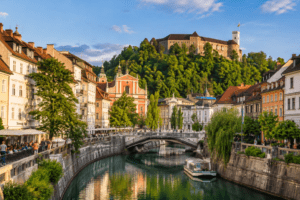
Slovenia’s capital is small — roughly 300,000 people — and almost entirely walkable from the old town along the Ljubljanica River up to Ljubljana Castle. It’s a genuinely pleasant city, not a city that’s impressive for a capital, but one that’s actually enjoyable to spend two or three days in. Metelkova, the city’s autonomous arts district, adds something gritty and interesting to an otherwise very clean urban experience.
Slovenia vs Croatia: Which One Should You Choose?
This is the question most travelers are quietly asking even when they type “is Slovenia worth visiting.”
Some travel writers argue Croatia is clearly the better pick for first-time Balkans/Adriatic visitors. That’s valid if your priority is a beach holiday with nightlife, a reliably sunny coastline, and a larger number of flights. But if you’re in a different situation, the calculus shifts.
Slovenia vs Croatia: Quick Comparison
| Factor | Slovenia | Croatia |
|---|---|---|
| Landscape variety | Alpine, cave, coast, city — all within 3 hours | Primarily coastal, islands, some inland |
| Crowds | Moderate outside Bled | High on Dalmatian coast in summer |
| Daily budget (mid-range) | €90–130 | €85–125 |
| Visa (Schengen non-EU) | Schengen Type C | Schengen Type C (Croatia joined 2023) |
| Best for | Nature variety, shorter trips, repeat Europe visitors | Beach holiday, island-hopping, first Adriatic trip |
| Coastline | 47km | 1,777km |
The key difference is scope. Croatia rewards longer trips, especially if island-hopping is the plan. Slovenia rewards travelers who want maximum variety in minimum time — or who are combining it with Austria, Italy, or a broader Central Europe circuit.
I’ve seen conflicting data on which is “cheaper” — some sources say Croatia, others say Slovenia. My read is they’re essentially level at mid-range, with Slovenia having a slight edge in the interior regions and Croatia being cheaper for accommodation if you avoid Dubrovnik.
Best Time to Visit Slovenia
June through August is peak season. The weather is reliable, everything is open, and the Soča Valley is genuinely stunning in summer. The downside: Lake Bled is its most crowded, hotel prices in Ljubljana spike, and popular trails in Triglav National Park feel busy.
May and September are, in most practical ways, better months to visit.
Temperatures in May sit in the mid-teens to low-twenties Celsius. The tourist crowds are lighter, accommodation is 20–30% cheaper than peak, and the landscape is green from spring rains. September keeps warm temperatures while the summer rush dissipates.
Winter in Slovenia is underrated. Ljubljana runs a genuinely charming Christmas market. Kranjska Gora and the Alpine resorts offer skiing from December to March. Postojna Cave is good year-round — it stays a constant 10°C inside regardless of season.
Avoid late July and August for Bled specifically unless you book accommodation well in advance and are prepared for the crowds.
Practical Slovenia Travel Tips
Getting around: Slovenia’s train network is limited. Buses are the better option for inter-city travel. FlixBus connects Ljubljana to Koper, Maribor, and cross-border routes. For the Soča Valley and Karst region, a hire car is genuinely the most efficient option — public transport there is workable but infrequent.
Language: Slovenian is the official language. English is widely spoken in Ljubljana, tourist areas, and among anyone under 40 almost everywhere. You won’t struggle.
Currency: Euro. No conversion needed for Eurozone travelers; straightforward for everyone else.
SIM cards: Local SIM cards are available at the airport and in Ljubljana centre from providers including A1, Telekom Slovenije, and T-2. A tourist data SIM for a week runs roughly €10–15. Alternatively, EU roaming rules mean EU-issued SIMs work without surcharges.
Safety: Slovenia consistently ranks among the safest countries in Europe. Petty theft in tourist areas follows standard European patterns — keep valuables sensible and you’ll have no issues.
https://visitslovenia.com/slovenia/travel-guides/slovenia-faq/slovenia-visa-and-entry-requirements
Voice Search Q&A
Q: What’s the best time of year to visit Slovenia? A: May, June, and September offer the best balance of good weather and lighter crowds. July and August are peak season — beautiful but busy, especially around Lake Bled.
Q: How many days do you need in Slovenia? A: Four to five days covers Ljubljana, Lake Bled, and one other region comfortably. Seven days allows you to include the Soča Valley, Karst, and Piran without rushing.
Q: Should I visit Slovenia or Croatia? A: Choose Slovenia for landscape variety and shorter trips. Choose Croatia if a beach holiday or island-hopping is the priority. Both require a Schengen visa for most non-EU passport holders.
Q: How do I get around Slovenia without a car? A: Buses are the main option. FlixBus and the national bus network cover most major routes. For the Soča Valley and Karst region, a hire car makes the trip significantly easier.
Q: Why is Lake Bled so crowded? A: Lake Bled went viral on social media roughly 2018–2020 and hasn’t quieted since. Summer weekends see thousands of day-trippers from Ljubljana, Vienna, and Zagreb. Visiting on weekday mornings or in shoulder season reduces the crowds noticeably.
Final Verdict: Is Slovenia Worth It in 2026?
Yes. Clearly yes.
It’s worth it for the traveler who wants Central Europe without the crowds of Prague or Vienna. It’s worth it for the non-EU traveler who already has or is getting a Schengen visa and wants to use it somewhere genuinely varied. It’s worth it as a standalone destination and as part of a broader Italy-Austria-Slovenia circuit.
The one opinion some travelers will push back on: I’d say Ljubljana is worth two nights minimum, not a quick half-day stop as many itineraries suggest. The city rewards slowing down — the café culture along the river, the castle walk at dusk, Metelkova in the evening — and travelers who rush through it mostly to tick a box before heading to Bled are missing the part of Slovenia that feels most like itself.
Go before the other crowds find it. Most of them are still booking Croatia.