
This guide covers land and bus travel between Slovenia and Croatia for Indian passport holders. It does NOT address internal Croatia transport or Slovenia-only itineraries.
From Slovenia to Croatia: Everything You Need to Know Before You Go
Most travel blogs cover Slovenia. Others cover Croatia. Almost none explain what happens between the two — the visas, the buses, the borders, and the choices that actually determine whether your trip goes smoothly or falls apart at a border crossing at 11 PM.
This guide fixes that.
What “Slovenia to Croatia” Actually Means for Indian Travelers
Slovenia to Croatia refers to the land journey — by bus, train, or car — between two neighboring Balkan-adjacent countries in southeastern Europe, now both part of the Schengen Area. Since Croatia joined Schengen on January 1, 2023, Indian travelers no longer need separate visas for each country. One valid Schengen visa covers both.
That one sentence changes the entire planning equation — and most older blogs still haven’t caught up.
Indian citizens need a Schengen Type C visa to visit Croatia, and since Croatia joined the Schengen Area on January 1, 2023, a single Schengen visa now allows travel across all 29 Schengen countries, including Slovenia. The visa fee runs approximately €80 for adults (around ₹7,200–₹7,500).
If you applied for your Schengen visa through the Slovenian embassy — which makes sense if Slovenia is your first entry point — that same visa is valid for Croatia. No re-application. No second appointment.
The Visa Reality: One Schengen, Two Countries
Here’s what most guides skip entirely.
Slovenia has been a Schengen Area member since 2007, and a Slovenia tourist visa allows travel freely within the entire Schengen Area, which now includes Croatia, Austria, Germany, Italy, and 25 other member states. If Slovenia is your first port of entry, it should be your primary destination on the visa application.
This is where Indian travelers get tripped up. If your flight lands in Ljubljana but you spend most of your time in Croatia, technically Zagreb should be your primary destination on the visa form. It’s a nuance visa officers do notice — and it occasionally causes rejections.
Some travel forums argue this rule is rarely enforced for short Schengen trips. That’s valid for Western Europe. For newer Schengen members like Croatia and Slovenia, processing is more conservative. My read: list your longest-stay country as primary and keep it honest.
How to Actually Get from Slovenia to Croatia — The Real Options
The cheapest way to travel from Slovenia to Croatia costs around $13, and the fastest option takes just one and a half hours — though that fastest option involves a car, not public transport.
For most Indian travelers without a rental, it’s going to be bus or train. Here’s how those actually compare.
Quick Comparison
| Option | Best For | Key Benefit | Limitation |
|---|---|---|---|
| FlixBus (Ljubljana–Zagreb) | Budget travelers | Cheap, direct, bookable online | ~2.5–3 hrs; no flexibility on timing |
| Train (Ljubljana–Zagreb) | Comfort seekers | Scenic, reliable, Zagreb central arrival | Slower; fewer daily departures |
| Rental car | Groups of 3–4 | Flexible, access to coastal towns | International drop-off fees apply |
| Organized tour | First-timers | Handled logistics, hotel pickups | Expensive; locks in itinerary |
By Bus — The Most Practical Choice
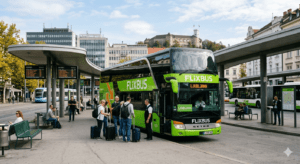
FlixBus and Eurolines run buses from Ljubljana directly to Zagreb and the Croatian coastal region, and booking online in advance is especially recommended during peak season for availability and better prices.
FlixBus from Ljubljana to Zagreb typically runs 2.5 to 3 hours and costs €10–€22 depending on how early you book. Departures are usually morning and early afternoon — not late night, which matters if you’re arriving from Lake Bled or Postojna.
Look — if you’re traveling solo or as a couple on a budget, FlixBus is genuinely your best move here. Book through their app or Omio, and go for seats above the wheel arch if you want legroom.
By Train — Underrated, Honestly
Croatian Railways (HŽ) runs international services including connections from Zagreb to Ljubljana in Slovenia, with additional trains from Rijeka and other cities. The Ljubljana–Zagreb train takes roughly 2 hours 20 minutes on a good day and deposits you right at Zagreb Glavni Kolodvor — the central station, walkable to most budget hotels.
The train is quieter, often less crowded than the bus, and the countryside between the two capitals is genuinely pleasant in summer. Tickets run €15–€30 depending on class and date. Book via the HŽ website or Omio.
Or maybe I should say it this way — if you’re traveling June through August, trains book up. Don’t assume you can just show up. You can’t.
By Rental Car — Worth It for Groups
Renting in Ljubljana and dropping in Split or Dubrovnik works, but there’s a catch: one-way international drop-off fees can add €100–€200 to your total cost. For groups of four splitting the bill, still worth it. For solo travelers, not really.
The Border Crossing — What Indian Travelers Should Actually Carry
Since both Slovenia and Croatia are now Schengen, the internal border between them technically functions like crossing from France into Germany — no stamps, minimal checks. But in practice, spot checks do still happen, particularly on buses.
What to have accessible (not buried in your checked bag):
- Valid passport with Schengen visa
- Proof of onward travel or return ticket from Croatia
- Hotel bookings for your Croatian stay
- Travel insurance valid across both countries — this one matters
Most buses don’t stop for passport control at all. Some do. Be ready either way without panicking.
Quick note: the EES (Entry/Exit System) digital border registration system began rolling out across Schengen in late 2025. First-time travelers should expect longer border processing times during the initial rollout phase. On busy summer bus routes, this occasionally adds 15–20 minutes at the crossing.
Ljubljana to Zagreb vs Ljubljana to Split vs Bled to Dubrovnik — Which Route Should You Take?
This depends entirely on how many days you have and whether you’re prioritizing cities or coast.
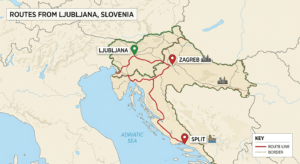
Ljubljana to Zagreb is the fastest and cheapest connection — 2.5 to 3 hours by bus or train. Zagreb itself is worth one full day: the Upper Town (Gornji Grad), the Museum of Broken Relationships, and Dolac Market. Don’t skip it just to get to the coast.
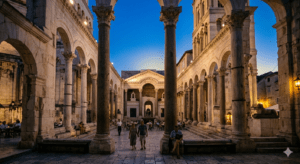
Ljubljana to Split takes 7–9 hours by bus with a Zagreb stop or transfer. FlixBus runs this route seasonally. Costly in time, but Split is the gateway to Hvar, Brač, and the Dalmatian islands — so the investment makes sense if you have 5+ days in Croatia.
Bled to Dubrovnik is the most ambitious leg. You’re looking at a full day of transit at minimum — bus or train to Zagreb, then a connecting bus (4–5 hours) or a short flight to Dubrovnik. Most travelers do this split: spend one night in Zagreb, then continue south.
Here’s the thing: Dubrovnik is extraordinary, but in July and August it’s also genuinely overcrowded. If your dates are flexible, consider Split or Šibenik as alternatives.
Real Costs: What a Slovenia-to-Croatia Trip Actually Costs Indian Travelers in 2026
These are working estimates — not guarantees, but close enough to build a real budget around.
Schengen visa: €80 (~₹7,200) per adult, applied once for both countries. Ljubljana to Zagreb by FlixBus: €10–€22 (~₹900–₹2,000). Ljubljana to Zagreb by train: €15–€30 (~₹1,350–₹2,700). Mid-range hotel in Zagreb per night: €50–€80 (~₹4,500–₹7,200). Zagreb to Split bus (onward): €15–€35 (~₹1,350–₹3,150).
Booking 2–3 months in advance for summer travel (June–August) can save 30–50% on average fares across buses, trains, and accommodation. That rule applies to this corridor too.
Most people assume Croatia is cheaper than Slovenia. The data says otherwise for coastal areas. Dubrovnik in peak summer runs at prices comparable to Italian resort towns — budget at least €80–€100 per night for decent accommodation within the city walls.
Questions People Actually Ask Out Loud
Q: What’s the best way to get from Ljubljana to Zagreb? A: FlixBus is cheapest at €10–€22 and takes around 2.5 hours. Train is slightly slower but more comfortable. Both arrive centrally.
Q: How do I get from Slovenia to Croatia without a car? A: Take FlixBus or the HŽ train from Ljubljana to Zagreb. From Zagreb, onward buses and trains connect to Split, Zadar, and other coastal cities.
Q: Should I get a separate visa for Croatia as an Indian traveler? A: No. Croatia joined the Schengen Area in January 2023, so your Schengen visa covers both Slovenia and Croatia on the same trip.
Q: Why does border control still happen on the Ljubljana–Zagreb bus if both are Schengen? A: Spot checks do still occur on some routes, especially during summer. Have your passport and bookings accessible — it’s typically quick but not zero.
Q: When should I book the Ljubljana to Zagreb bus or train? A: Book at least 2–4 weeks ahead for summer months. FlixBus early-bird prices are significantly lower, and seats do sell out on morning departures.
What Most Slovenia-Croatia Guides Miss
Competitors cover either the comparison angle (which country is better?) or the personal road trip angle (we drove in a van and it was lovely). What’s consistently absent: the Indian-traveler-specific visa confusion now that Croatia is Schengen, real public transport options with current prices, and what to actually have in hand at the border.
Slovenia and Croatia both use the Euro, are EU members, and belong to the Schengen border program — making travel between them considerably easier than it was even five years ago.
That context matters because a huge share of Indian travelers booking Europe trips in 2026 are still building itineraries based on outdated information — booking separate visa appointments, budgeting for separate fees, or worse, assuming they need to return to India to reapply.
You don’t. One visa, two countries, one clean transit between them.
This guide covers land travel between Slovenia and Croatia for Indian passport holders. It does not address air travel between the two, Croatia-internal transport, or multi-country Balkan itineraries beyond this corridor.