
Getting Yellow Sweat Stains Out of Your Shirts, Step by Step
The fastest fix is a paste of baking soda and 3% hydrogen peroxide, rubbed in and left for 30 minutes before washing in cool water. That handles most white cotton shirts. Colored and delicate fabrics need a gentler route, covered below.
Removing sweat stains means breaking down the residue that sweat, body oils, and antiperspirant leave in fabric fibers. The yellow color comes from that buildup, not from sweat alone. So the fix is chemical, not just scrubbing.
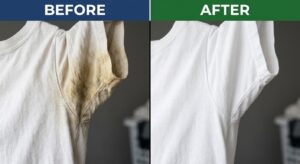
Why Sweat Stains Turn Yellow (and Why Hot Water Makes Them Worse)
Sweat stains turn yellow because sweat proteins react with aluminum compounds in antiperspirant and bind to the fabric. According to Cleveland Clinic (2023), sweat itself is mostly odorless and colorless. The discoloration comes from that reaction plus oils and bacteria. Heat then locks it in.
Most people assume sweat is the culprit. The evidence points to your deodorant chemistry instead.
That explains a common complaint. Users who’ve tried a hot wash or a tumble dryer often report the stain looks darker afterward, and they’re right. Heat cooks proteins into the weave, the same way a hot pan sets an egg. Cool or lukewarm water is the rule until the stain is fully gone.
Check the dryer too. One trip through it can make a faint stain permanent.
The Fastest Method for Fresh and Old Stains
Removing a sweat stain at home works best with a baking soda and peroxide paste. According to laundry guidance from major cleaning brands, oxygen-based agents lift the protein and oil residue that detergent leaves behind. Baking soda adds gentle grit, and peroxide does the brightening on white fabric.
To remove a sweat stain, follow these steps:
- Soak the stained area in cool water for 15 minutes.
- Mix baking soda and 3% peroxide into a thick paste.
- Rub the paste in with a soft brush.
- Leave it for 30 minutes.
- Rinse, wash cool, and air-dry to check the result.
Air-drying matters because you can see whether a ghost of the stain remains. If it does, repeat before any heat touches the shirt.
What Works on Which Fabric
Here’s the thing: the same treatment can rescue one shirt and ruin another. Peroxide can lighten dyed fabric, and vinegar can weaken some delicate fibers with repeated use.
Quick Comparison
| Option | Best For | Key Benefit | Limitation |
|---|---|---|---|
| Baking soda + peroxide paste | White cotton, old stains | Lifts stiff, crusty buildup | Can fade colors |
| White vinegar (diluted 1:1) | Fresh stains, colored shirts | Cheap, gentle on most dyes | Weak on old stains |
| Oxygen cleaner (OxiClean, Vanish Oxi Action) | Set-in stains, mixed loads | Overnight soak, minimal scrubbing | Costs more per use |
| Enzyme pre-treat spray (Shout, Stain Devils) | Protein-heavy stains | Works before washing, no mixing | Needs several minutes to act |
Baking soda paste vs white vinegar: baking soda paste is better suited for stiff, crusty stains because its grit lifts residue. Vinegar works better when the stain is fresh or the fabric is colored. The key difference is abrasion versus acid.
White cotton
The paste method is your best bet. Cotton tolerates scrubbing and peroxide well.
Colored fabric
Test peroxide on a hidden seam first. If the color shifts, switch to diluted vinegar or an oxygen cleaner labeled color-safe.
Polyester and synthetics
These hold onto body oils and smell more than cotton. An enzyme spray tends to outperform home remedies here.
Silk, wool, and dry-clean-only pieces
Skip everything above. Take them to a cleaner.
Old, Set-In Stains: What Most Guides Skip
Old stains need patience, not force. What most guides skip is time: an oxygen-based cleaner dissolved in cool water, with the shirt soaked for 6 to 8 hours, usually beats aggressive scrubbing. Scrubbing frays the fabric and leaves a shiny patch.
Some experts argue enzyme cleaners beat every kitchen remedy. That’s valid for protein-heavy stains that have aged for months. But if you’re dealing with a fairly recent stain on a white cotton shirt, baking soda and peroxide costs pennies and does the same job.
Now the opinion some readers will push back on: skip chlorine bleach, even on whites. It reacts with the proteins in sweat and can turn the stain a deeper yellow-brown, so it often makes things worse rather than better.
I’ve seen conflicting data on vinegar. Some sources say a vinegar soak is the ideal first step for old stains, while others warn it can weaken fibers over time. My read is that one soak is fine and a weekly habit isn’t.
Or maybe I should say it this way: use vinegar to rescue a shirt, not to maintain it.
Stop the Next Stain Before It Starts
Prevention beats rescue. Let deodorant dry fully before you dress, since wet product transfers straight onto fabric. Wear a thin undershirt in summer. Wash sweaty shirts within a day or two, before residue hardens.
Switching to an aluminum-free deodorant can reduce yellowing for some people, though results vary and it may not control wetness as well. If you sweat heavily enough that shirts are ruined in weeks, it’s worth mentioning to a doctor, as excessive sweating is a treatable condition. This is general information, not medical advice.
This guide covers washable cotton, polyester, and blends. It does NOT address leather, suede, or dry-clean-only fabrics. It works best on stains that haven’t been through repeated dryer cycles, and it won’t help on fabric already brittle or permanently discolored from years of heat.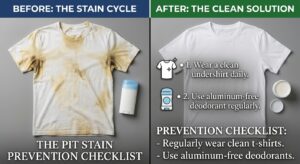
Quick Answers
Q: How do I get yellow sweat stains out of white shirts?
A: Rub in a paste of baking soda and 3% hydrogen peroxide, wait 30 minutes, then wash in cool water. Repeat before drying if any yellow remains.
Q: What’s the best homemade sweat stain remover?
A: Baking soda mixed with hydrogen peroxide is the strongest common option for white cotton. For colored shirts, diluted white vinegar is safer.
Q: Should I use hot water on sweat stains?
A: No. Heat sets the proteins into the fibers and makes yellow stains darker. Use cool or lukewarm water until the stain is completely gone.
Q: Why does my shirt still smell after washing?
A: Body oils and bacteria cling to fabric, especially polyester. An enzyme pre-treat or an overnight oxygen cleaner soak breaks that residue down.
Q: When should I give up and throw the shirt out?
A: When two full treatments leave no improvement, or the fabric feels thin and stiff. Old heat-set stains on delicate fabric rarely come fully clean.
The Short Version
Look — if you’re staring at a stained favorite shirt, don’t panic and don’t reach for hot water. Soak cool, use the paste, and air-dry to check. Most stains give way in one or two rounds.
https://www.esquire.com/style/grooming/g73571442/best-invisible-deodorant/