
Powdered Sugar Shelf Life: When It’s Safe and When to Toss It
Yes, powdered sugar can go bad, but it takes a long time and rarely for the reason people expect. Sugar itself doesn’t spoil. What ruins it is what gets into the bag: moisture, pests, and stray smells.
This guide covers store-bought confectioners’ sugar kept in a home pantry. It works best for bakers deciding whether to use an old bag. It won’t help with homemade powdered sugar or frosting already mixed with butter or milk.
Does Powdered Sugar Go Bad?
Does powdered sugar go bad refers to whether confectioners’ sugar loses safety or quality over time. Powdered sugar is finely ground sugar blended with about 3% cornstarch. It rarely becomes unsafe, but it can clump, absorb odors, or get contaminated.
Whether powdered sugar goes bad depends on storage far more than on the calendar. According to the USDA, date labels on most foods describe peak quality rather than safety. A bag past its best-by date is usually fine if it’s dry, free of pests, and smells normal.
Here’s the thing: it’s hard, it won’t pour, and you’ve decided it’s ruined, but it isn’t. Most people bin a usable bag over a texture problem.
Hardness is cosmetic. Mold is a verdict.
How Long Does Powdered Sugar Last?
Powdered sugar keeps its best quality for about two years when stored well. Manufacturer guidance generally points to that window for sealed bags and tightly resealed ones kept somewhere cool and dry. Past two years it’s usually still safe, just more likely to clump or taste flat.
Opened powdered sugar in its original paper bag fares worse. Paper breathes, so humidity creeps in and odors from nearby onions or spices follow. Sugar’s low water activity keeps microbes from growing in it, so contamination, not age, is the real risk.
I’ve seen conflicting data. Some sources say sugar lasts indefinitely, while others cap powdered sugar at two years. My read is that two years is a quality window, not an expiry cliff, because moisture and odors ruin sugar long before the calendar does.
Most people assume age is the enemy. Food-science basics say otherwise. A sealed bag in a dry cupboard can easily outperform a younger, open bag parked beside the stove.
How to Tell If Powdered Sugar Has Actually Gone Bad
Check these signs before you bake:
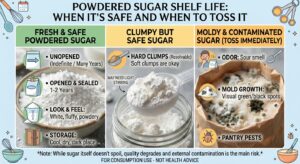
- A musty, sour, or “off” smell. Fresh powdered sugar smells faintly sweet or like nothing at all.
- Visible mold or discoloration. Look for green, gray, or dark spots, especially near the bag’s seams.
- Pests. Pantry moths, webbing, ants, or tiny beetles mean the whole bag goes.
- Wet or sticky patches that don’t crumble dry between your fingers.
What most guides skip is the difference between hard and spoiled. Hard sugar has simply absorbed moisture and set. Spoiled sugar smells wrong or shows growth. Or maybe I should say it this way: lumps are a storage problem, while smell and mold are a safety problem.
Look — if you’re holding a bag with even a faint musty smell, don’t try to rescue it. Bin it. A $3 bag isn’t worth risking a $30 cake.
That’s an opinion some bakers will push back on, since sifting seems thrifty. But sifting removes lumps, not odors or mold spores you can’t see. If anyone eating the bake has a weakened immune system, the call is even easier.
How to Fix Hardened Powdered Sugar
Powdered sugar clumps because cornstarch, the anti-caking agent, absorbs some moisture but not unlimited amounts. Once humidity wins, the fine crystals fuse together. That’s the whole mystery.
To soften clumpy powdered sugar, follow these steps:
- Break large lumps apart with a fork.
- Pulse the sugar in a food processor for 20 seconds.
- Sift through a fine mesh sieve.
- Stir in a teaspoon of cornstarch per cup if it’s still sticky.
- Store it in an airtight container.
Quick note: this only works for dry, clean sugar that smells normal. If the clumps feel damp or the smell is off, skip the fix.
Users who’ve tried microwaving or oven-drying hardened sugar often report scorched edges and caramelized spots. Pulsing and sifting is gentler and works nearly every time.
What’s the Best Way to Store Powdered Sugar?
Some experts argue the freezer is the best place for powdered sugar. That’s valid for bulk buyers and people in humid climates. But if you bake a few times a year, a sealed container in a cool cupboard does the same job without the condensation risk of thawing.
Quick Comparison
| Option | Best For | Key Benefit | Limitation |
|---|---|---|---|
| Airtight container (pantry) | Regular bakers | Blocks humidity and odors | Needs cupboard space |
| Freezer container | Bulk buyers, humid homes | Longest quality window | Condensation if opened cold |
| Original paper bag | Using within a few weeks | Zero effort | Absorbs moisture and smells |
Pantry container vs freezer: a pantry container is better suited for occasional bakers because it’s simple and keeps sugar ready to use. The freezer works better when you buy in bulk or live somewhere humid. The key difference is that freezing adds protection but also adds a thaw step.
Brands like Domino and C&H sell powdered sugar in paper or plastic bags that aren’t built for long-term storage once opened. Transfer it to an airtight container, such as an OXO POP or a Rubbermaid Brilliance. Keep it away from the stove, dishwasher, and any strong-smelling foods.
If you freeze it, let the sealed container reach room temperature before opening. That one habit prevents most thaw-related clumping.
Quick Answers
Q: What’s the best container for powdered sugar?
A: An airtight container with a silicone seal, like an OXO POP or Rubbermaid Brilliance, works best. Keep it in a cool, dark cupboard away from the stove.
Q: How do I fix rock-hard powdered sugar?
A: Break it up, pulse it in a food processor, then sift. If it feels damp or smells off, throw it out instead of trying to fix it.
Q: Should I use powdered sugar that’s past its best-by date?
A: Yes, if it’s dry, pest-free, and smells normal. The date reflects quality, not safety. Skip it if you see mold, bugs, or a musty odor.
Q: Why does powdered sugar get hard?
A: Sugar absorbs moisture from the air. The cornstarch slows this down but can’t stop it, so crystals fuse into lumps once humidity gets in.
Q: When should I throw powdered sugar away?
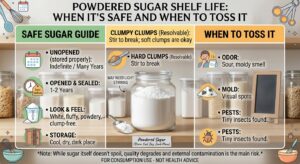
A: Toss it when you see mold, pests, or wet spots, or when it smells musty. Hard clumps alone aren’t a reason, but a sour smell is.
Bottom line: an old bag of powdered sugar usually deserves a smell test and a sift, not the trash. Trust your nose, keep it sealed and dry, and save the bin for mold, bugs, and musty odors.