
Does Cornmeal Go Bad? The Check That Settles It
Last updated: October 2026
Yes, cornmeal goes bad. How fast depends on which kind you own.
Cornmeal going bad means the fat in the grain has turned rancid, moisture has let mold start, or pantry pests have moved in. Rancidity ruins flavor. Mold and insects mean the bag goes in the trash.
You’re probably standing in the kitchen with a half-used bag, a best-by date that passed months ago, and no memory of whether it was the regular or the stone-ground kind. This guide gives you the verdict first, then the reasons, then the details that help you decide.
How Long Does Cornmeal Last?
Cornmeal lasts roughly 6 to 12 months in a pantry. According to University of Vermont Extension (2023), the pantry range for cornmeal is 6 to 12 months, and Kansas State University’s cupboard chart lists 12 months when it’s kept tightly covered. Both tables draw on USDA FoodKeeper guidance.
I’ve seen conflicting data. Some food blogs promise one to two years on the shelf, while the university tables stay at 6 to 12 months. My read: trust the shorter range, because it assumes real kitchens that get warm in summer.
The best-by date matters less than the type. Standard degerminated cornmeal often stays fine for months past the date, whereas whole grain cornmeal has far less margin. According to extension charts based on FoodKeeper data, degerminated cornmeal keeps good quality in the freezer for up to two years.
So the date is a guide. Nothing more.
How to Tell if Cornmeal Has Gone Bad
Smell is the fastest test. Fresh cornmeal smells mild and faintly sweet, like dried corn. If yours smells like paint, cardboard, or stale nuts, the oils have oxidized. According to Bob’s Red Mill’s label guidance, their whole grain cornmeal belongs in the fridge or freezer once opened, for exactly this reason.
Most people assume spoiled flour looks spoiled. The data says otherwise: the most common problem, rancid fat, shows up in your nose long before anything shows on the surface.
The 30-Second Test
To check cornmeal quickly, follow these steps:
- Open the bag and smell it directly.
- Look for clumps, mold, webbing, or bugs.
- Rub a pinch between your fingers.
- If unsure, cook a teaspoon into porridge and taste it.
- Bitter, sour, or musty means throw it out.
Look, if you’re still unsure after step 3, do the taste test. One spoonful of porridge costs nothing, but a full pan of cornbread costs butter, eggs, and an evening. And if it smells like paint, sugar won’t hide it.
Mold, Clumps, and Insects
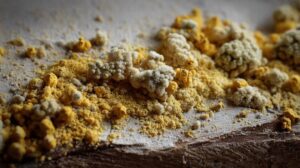
Damp clumps that hold together instead of crumbling mean water got in. Mold is likely growing inside even if you can’t see it yet. Pantry moths, weevils, and grain beetles love cornmeal, so any webbing, larvae, or live bugs mean the whole bag goes, and the neighboring pantry items need a check too.
Quick note: tiny dark specks in whole grain cornmeal are bran fragments, not mold.
Rancid cornmeal won’t hurt you, or maybe I should say it this way: it’s unpleasant rather than dangerous. Mold is different. Don’t taste it and don’t scrape it off. If you’re unsure, or anyone eating it has a health condition, toss it. Cornmeal is cheap.

Degerminated vs. Whole Grain: Two Types, Two Timelines
The difference is the germ. It holds nearly all the fat in the corn kernel, which gives whole grain cornmeal its deeper flavor and also makes it perishable once oxygen, heat, and light reach it. Degerminated cornmeal, such as the standard Quaker bags, has almost no fat left to spoil. Stone-ground and whole grain products, like Bob’s Red Mill, need cold storage.
Check the label. “Whole grain,” “stone-ground,” or “unbolted” signals the delicate kind. “Degerminated” or “enriched” signals the stable one.
Degerminated vs. Whole Grain Cornmeal: Degerminated cornmeal is better suited for the pantry because the fat-rich germ has been removed. Whole grain or stone-ground cornmeal works better when you want fuller flavor and can store it cold. The key difference is that the germ adds flavor and shortens shelf life.
Quick Comparison
| Option | Best For | Key Benefit | Limitation |
|---|---|---|---|
| Degerminated (pantry) | Breading, occasional baking | Lasts up to 12 months without refrigeration | Milder flavor |
| Whole grain/stone-ground (fridge) | Cornbread, rustic polenta | Full corn flavor | Only a few months once opened |
| Frozen (either type) | Bulk buyers, rare bakers | Longest quality, deters moths | Freezer space, condensation when thawing |
Some experts argue degerminated cornmeal easily lasts two years on the shelf. That’s valid for a cool, dry basement. But if your kitchen runs warm or humid, plan around the shorter extension numbers.
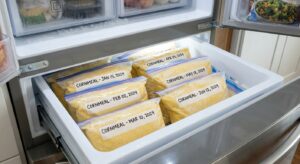
Here’s an opinion you can push back on: if you bake with cornmeal only once or twice a year, freeze every type, even the degerminated kind. Freezer space is cheaper than a ruined batch, and the bag stays safe from moths.
How to Store Cornmeal So It Lasts
The paper bag stops sealing well after the first use. Move the cornmeal to a glass jar or hard-sided container with a tight lid. Keep it away from the stove, oven, and dishwasher, and out of light.
A few habits make the biggest difference:
- Dry spoon only: Even a small splash of water can trigger clumping and mold within days.
- Label the type and date: Both kinds look nearly identical in a jar.
- Freeze in portions: Use freezer bags, press the air out, and let the bag reach room temperature before opening.
- Refrigerate whole grain: Keep it in the main compartment, not the door.
What most guides skip: moth eggs are tiny and sometimes arrive from the store. Many pest-control guides suggest freezing new grain products for at least 48 hours before shelving them, which protects the rest of your pantry too.
This guide covers dry, raw cornmeal. It does NOT address cooked polenta, masa harina, or cornstarch. And these tips work best on cornmeal that still smells fresh. Cold slows spoilage, but it can’t undo it.
Quick Answers
Q: How long does cornmeal last after opening?
A: Degerminated cornmeal usually lasts up to a year in a sealed container in the pantry. Whole grain and stone-ground cornmeal should go in the fridge after opening and lasts only a few months.
Q: How do I know if my cornmeal is rancid?
A: Smell it first. Fresh cornmeal smells mild and like corn. Paint, cardboard, or stale nut smells mean rancid. If you’re unsure, cook one teaspoon and taste it.
Q: Should I freeze cornmeal?
A: Yes, especially whole grain, or if you bake rarely. Portion it into airtight bags and let it warm up before opening so condensation doesn’t form.
Q: Why does cornmeal go rancid?
A: The corn germ holds most of the fat. Oxygen, heat, and light oxidize that fat and make it taste bitter. Degerminated cornmeal has very little of it.
Q: When should I throw cornmeal away?
A: Throw it out for mold, damp clumps, webbing, insects, or a bitter, sour smell. Dates don’t matter at that point. Check nearby pantry items for pests as well.
Your Next Step
Run the 30-second test on your bag right now. If it smells mild and looks dry and clean, use it. If it smells like paint, or shows clumps or bugs, it goes in the trash.
Then make one small change: a glass jar, a label, and the freezer for the rest. Next time, you won’t be guessing in front of the pantry.