
Mashed Potato Leftovers: How Many Days Before They Go Bad
Last updated: October 2026
Mashed potatoes last 3 to 4 days in the fridge when you refrigerate them within two hours of cooking. After day four, throw them out, even if they look fine.
Mashed potatoes in the fridge refers to cooked potatoes stored in a sealed container at 40°F (4°C) or below. The clock starts when they finish cooking, not when you put them away. That distinction trips up a lot of people.
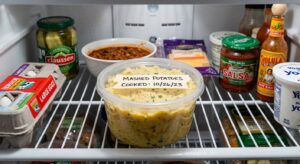
How Long Do Mashed Potatoes Last in the Fridge?
The safe window is 3 to 4 days. That figure comes from the USDA’s Food Safety and Inspection Service, which applies it to most cooked leftovers.
According to USDA FSIS, refrigerated leftovers should be eaten within three to four days. Mashed potatoes follow that rule. Day one through day four is safe. Day five is a gamble you don’t need to take.
Homemade mashed potatoes last 3 to 4 days in the fridge because cooking kills most bacteria, but storage lets new ones grow. According to the CDC, roughly 48 million Americans get sick from foodborne illness every year (CDC, 2011 estimates). Leftovers are a common culprit.
I’ve seen conflicting advice here. Some sources say five days is fine, others say three. My read: treat four as the hard ceiling.
Here’s the thing: butter, milk, and cream make mashed potatoes a friendlier home for bacteria than plain boiled potatoes. That’s why the rule is tighter than people expect.
Some experts argue a very cold fridge, around 34°F, extends that window slightly. That’s valid for a fridge you’ve checked with a thermometer. But if yours is packed, opened constantly, or set to a default you’ve never verified, stick with four days.
How Long Can Mashed Potatoes Sit Out?
Two hours. That’s the limit at room temperature.
How long mashed potatoes can sit out is a maximum of two hours, or one hour if the room is above 90°F (32°C). According to USDA FSIS, bacteria multiply fastest between 40°F and 140°F, the range called the “danger zone.” Mashed potatoes left on a counter all afternoon are in it.
Look — if you’re hosting a holiday dinner and the bowl has been on the table since the toast, don’t save it. Chill what’s left now, and if you lost track of time, toss it. The cost of a bowl of potatoes is tiny.
A quick fix: split the batch into shallow containers before chilling. A thick, deep pot of potatoes cools slowly in the middle, and the center stays warm for hours.
To store mashed potatoes safely, follow these steps:
- Cool them within two hours of cooking.
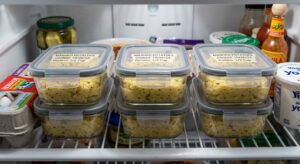
- Spoon into shallow, airtight containers.
- Label with the cook date.
- Refrigerate at 40°F or below.
- Eat within four days.
Homemade vs. Store-Bought vs. Instant
The three types don’t last equally long, and mixing them up causes most of the confusion.
Store-bought refrigerated mashed potatoes, such as Bob Evans, carry a printed use-by date. That date applies to the sealed package. Once you open it, treat it like homemade and use it within three to four days. Instant potatoes like Idahoan are different: the dry flakes last for months in the pantry, but the moment you add water or milk, they become leftovers on the same 3-4 day clock.
Quick Comparison
| Option | Best For | Key Benefit | Limitation |
|---|---|---|---|
| Homemade | Fresh meals, holiday batches | Full control of ingredients | 3-4 days refrigerated |
| Store-bought refrigerated | Busy weeknights | Printed use-by date on the sealed package | 3-4 days once opened |
| Instant (dry) | Pantry stockpiling | Months of shelf life unprepared | 3-4 days once prepared |
Homemade vs. store-bought: homemade is better suited for big gatherings because you control the butter, salt, and portions. Store-bought works better when you need a predictable date on the package. The key difference is that store-bought only keeps its longer date while sealed.
Here’s a counter-intuitive one. Most people assume instant potatoes, being processed, last longer once prepared. They don’t. Once water goes in, the clock is identical to homemade.
How to Tell If Mashed Potatoes Have Gone Bad
Check these signs, but know their limits.
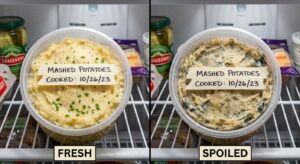
Spoiled mashed potatoes usually show a sour or sharp smell, a slimy or watery texture, grayish or pink discoloration, or fuzzy mold in green, black, or white patches. Any one of these means the container goes in the trash. Don’t taste to confirm. And don’t scoop off the moldy part, because mold threads spread well beyond what you can see.
Now the part guides skip. Most people assume the sniff test is a reliable safety check. The data says otherwise. The CDC notes that many germs that cause food poisoning don’t change how food looks, smells, or tastes. So potatoes that smell perfectly normal on day six can still make you sick.
That’s why the date on the lid matters more than your nose. If you can’t remember when you made them, the honest answer is to throw them out. Or maybe I should say it this way: no date, no dinner.
One opinion some readers will push back on: I’d toss mashed potatoes at day four even if they look and smell great. The reason is simple. The downside of wasting a few dollars of potatoes is trivial next to a stomach bug, and visible signs show up late.
Can You Freeze and Reheat Mashed Potatoes?
Yes, and freezing is the best way to rescue a big batch.
Freeze mashed potatoes within the 3-4 day window, ideally the same day you cooked them. They’ll keep their best texture for about two to three months in a freezer at 0°F (-18°C). Use Ziploc freezer bags pressed flat, or Rubbermaid airtight containers, so you can portion them out later. Freezing is safe beyond that window, but quality drops, and you’ll notice a grainier, wetter texture.
To reheat mashed potatoes safely, follow these steps:
- Thaw overnight in the fridge.
- Add a splash of milk or butter.
- Heat on the stove or in the microwave.
- Stir until steaming throughout.
- Reach 165°F (74°C) before serving.
Reheat only what you’ll eat. Repeated cooling and reheating gives bacteria more chances to grow, and the texture suffers each time.
Quick note: potatoes made with a lot of cream or sour cream can separate after thawing. Stir them well, and a little extra butter brings them back.
Quick Answers
Q: How long do leftover mashed potatoes last in the fridge?
A: Three to four days in a sealed container at 40°F or below. Count from the day you cooked them, and discard them after day four.
Q: Can I eat mashed potatoes that sat out overnight?
A: No. Cooked potatoes shouldn’t sit out longer than two hours. Overnight puts them well inside the danger zone, so throw them away.
Q: How do I know if mashed potatoes are bad?
A: Look for a sour smell, slimy texture, discoloration, or mold. But remember, harmful bacteria can be present without any of these signs, so go by the date.
Q: Should I freeze mashed potatoes?
A: Yes, if you won’t finish them in four days. Freeze them promptly in airtight bags or containers, and they’ll hold good quality for two to three months.
Q: When should I reheat mashed potatoes to be safe?
A: Reheat them right before serving, until they reach 165°F throughout. Stir halfway through so there are no cold spots.
The Bottom Line
Four days is the cap. Cool within two hours, store airtight, label the date, and freeze what you won’t finish.
This guide covers cooked mashed potatoes stored in a home fridge. It does NOT address potatoes mixed with meat or gravy, which can follow different timelines. It also won’t help if the potatoes sat out past two hours, because storage advice can’t undo that. This is general food-safety information, not medical advice. If you’re pregnant, immunocompromised, elderly, or feeding young children, be stricter with leftovers and talk to a doctor if you feel ill after eating questionable food.