Red Wine Stain Removal: What Actually Works, Fabric by Fabric
Red wine on fabric is a race against time, not a mystery. How to remove red wine from clothes comes down to one thing above all else: how fast you act before the stain sets into the fibers.
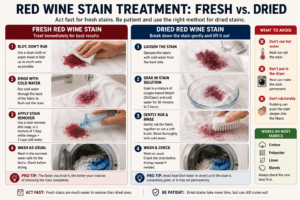
To treat a fresh red wine stain:
1. Blot (don’t rub) with a clean cloth.
2. Flush the back of the fabric with cold water.
3. Apply a dedicated stain remover.
4. Wash on the warmest safe setting for that fabric.
According to the American Cleaning Institute (2024), stains treated within minutes are far more likely to come out completely than ones left to sit and dry. Wine’s tannins bond to fibers as they dry — that’s the whole problem in a nutshell. The longer you wait, the more that bond hardens, and the more work it takes to break it back apart.
Look — if you’re standing in a restaurant bathroom right now with wine soaking into your shirt, skip ahead to the fresh-stain section below. If you just found a dried stain in the laundry basket from last weekend’s dinner party, jump straight to the section on set-in stains instead.
Why Red Wine Stains Are So Stubborn
Red wine stains are hard to remove because they combine pigment from grape skins with tannins, which behave almost like a natural dye fixative once they dry into fabric. Cold water and quick action limit how deeply that chemical bond forms in the first place.
Most people assume a stain is permanently “set” the moment it dries. The data says otherwise. Dried stains are harder to treat, not impossible to treat. A proper rehydration soak paired with the right product can still lift wine that’s been sitting for hours, and sometimes even days, though results vary depending on the fabric and how much heat it’s already been exposed to.
Here’s the thing: what most guides skip is that salt and baking soda, the internet’s favorite fix, don’t actually remove pigment from the fabric. They absorb surface liquid. That’s genuinely all they do. Useful for the first sixty seconds after a spill, close to useless after that window closes.
I’ve seen conflicting advice online about whether club soda outperforms plain water for this first step — some sources swear by the carbonation, others say it makes no measurable difference. My read is that cold water works just as well in practice, and it’s far more likely to actually be sitting in reach when you need it.
Fresh Stains: The First 10 Minutes Matter Most
Speed beats sophistication here, every time. A basic cold-water flush done immediately will outperform a fancy, expensive product applied twenty minutes too late.
- Blot the wine with a clean cloth or paper towel. Never rub — rubbing spreads pigment deeper into the weave and widens the stain instead of lifting it.
- Stretch the fabric over a bowl or the sink and pour cold water through the back of the stain, pushing the wine out the way it came in.
- If salt or baking soda is within reach, use it briefly to soak up excess liquid. Don’t count on it as the whole solution, though — it isn’t one.
- Apply a proper stain remover. Wine Away Stain Remover is formulated specifically for this job and travels well, which makes it a smart thing to keep on hand for restaurant dinners or house parties.
- Wash the item as soon as you reasonably can, using the warmest water the fabric’s care label allows.
Quick note: don’t toss the item in the dryer until you’ve confirmed the stain is fully gone. Heat cooks in whatever pigment is left behind, and once that happens, you’re pretty much stuck with it for good.
Dried or Set-In Stains: Slower, Not Hopeless
A dried stain needs rehydration before any stain remover can actually do its job. Scrape off crusted residue first with a dull knife edge or spoon, working gently so you don’t damage the fibers underneath.
Once the area is scraped clean, soak it in cold water for fifteen to thirty minutes to loosen things up. After that, work in OxiClean Max Force or Tide Ultra OXI directly on the stain and let it sit — check the product label, but fifteen to thirty minutes is typical for most fabrics. Wash on the hottest setting the fabric allows, then inspect the spot closely before drying it. If any shadow of the stain remains, repeat the whole treatment rather than drying “just to see if it fades.” It won’t fade in the dryer. It’ll set permanently instead.
Best Way to Remove Red Wine Stains, by Fabric
Generic stain-removal advice tends to treat every garment the same way, and it really shouldn’t. A method that’s perfectly safe for cotton can permanently ruin silk.
Cotton is the most forgiving fabric on this list, honestly. A cold flush, a stain remover, and a hot wash is usually the whole story from start to finish. Cotton can also handle a longer soak if a particular stain is putting up a fight.
Synthetic fabrics like polyester, nylon, and common blends resist absorption, which helps somewhat, but they can trap pigment right at the surface layer instead. Use a cold flush, a liquid stain remover, then a warm — not hot — wash, since high dryer or wash heat can affect synthetic fibers before you’ve even confirmed the stain is fully out.
Wool is a different animal entirely, and it deserves more caution than most guides give it. No rubbing, no wringing, and absolutely no hot water. Blot gently, use a wool-safe cleaner or a small amount of diluted dish soap, hand wash in cool water, and let it air dry flat. For anything genuinely expensive, a professional cleaner is the safer call by far.
Silk is the fabric most likely to get damaged by an overzealous at-home stain-removal attempt. Test any product on a hidden seam first, no exceptions. Blot only, use a mild silk-safe detergent, and for anything beyond a small fresh spot, take it to a professional rather than gambling on it yourself.
Quick Comparison
| Fabric | Best For | Key Method | Limitation |
|---|---|---|---|
| Cotton | Everyday clothing | Cold flush + stain remover + hot wash | None major |
| Synthetic | Athletic wear, blends | Cold flush + liquid remover + warm wash | Heat-sensitive; avoid hot water |
| Wool | Sweaters, coats | Gentle blot + wool-safe cleaner + hand wash | No agitation, no hot water |
| Silk | Blouses, dresses | Blot + mild detergent, or professional clean | High risk of water spotting |
Mistakes That Turn a Treatable Stain Into a Permanent One
Some experts argue that any stain remover is better than none at all. That’s fair advice in a genuine emergency, but reaching for the wrong product, or the wrong water temperature, can do real and lasting damage.
- Hot water on a fresh stain cooks the pigment in before you’ve had any real chance to lift it out.
- Drying an item before the stain is fully gone is probably the single most common reason a perfectly treatable stain becomes a permanent one.
- Rubbing spreads pigment through the fabric instead of lifting it off the surface.
- Treating salt or baking soda as a complete fix, rather than a temporary stopgap, lets tannins keep setting while you wait around.
- Using a harsh or bleach-based remover on wool, silk, or colored synthetics can discolor the fabric permanently — sometimes leaving a mark worse than the original wine stain.
- Ignoring the care label entirely, especially on wool or silk, which can shrink or warp the garment even after the stain itself has lifted.
This guide covers home treatment for cotton, synthetic, wool, and silk garments specifically. It does not cover upholstery, carpet, or antique and heirloom textiles — those need a different approach altogether, often professional cleaning from the very start rather than any home remedy.
Q&A
Q: What’s the best way to remove a red wine stain right after it happens?
A: Blot immediately, flush cold water through the back of the fabric, then treat with a stain remover like Wine Away before washing.
Q: How do I get red wine out of clothes after they’ve already dried?
A: Soak the area in cold water to rehydrate it, apply a stain remover such as OxiClean Max Force, let it sit, then wash on the hottest safe setting.
Q: Should I use hot water on a red wine stain?
A: Not at first. Hot water can set a fresh stain permanently — start cold, and only use hot water once the stain is fully treated and confirmed gone.
Q: Why doesn’t salt work on red wine stains?
A: Salt absorbs surface liquid but doesn’t touch the pigment or tannins causing the actual stain, so it’s only a short-term first-aid step.
Q: When should I take a wine-stained item to a professional cleaner instead of treating it at home?
A: For silk, wool, or anything valuable where the stain hasn’t lifted after one at-home attempt — repeated home treatment risks damaging delicate fibers.